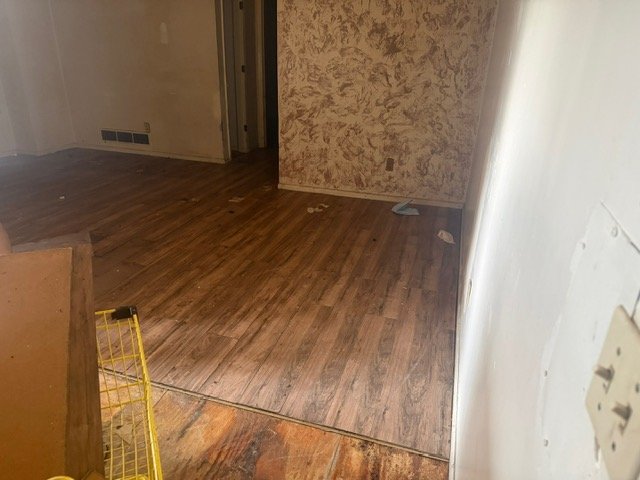
Almost every repaint uncovers something: a doorknob hole, a hairline crack over a window, a soft patch under an old leak. Fixing the hole is the easy part. Making the repair invisible once there is paint on it is the part that takes practice.
Feathering Is the Whole Trick
A patch fails visually when the compound stops abruptly and creates a raised island on the wall. The fix is to build the joint compound in thin coats and feather each one wider than the last, then sand until you cannot feel the transition with the flat of your hand. If your hand can find it, a lamp will too.
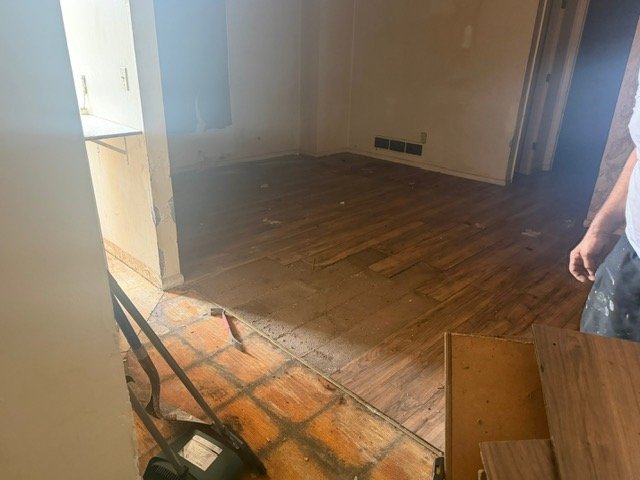
Water Damage Is Different
Stained drywall that is still firm can often be sealed with a stain-blocking primer and painted. Drywall that has gone soft has lost its strength and needs to be cut out and replaced. Painting over it hides the stain for a season and then lets it bleed back through, which is why the repair decision comes before the color decision.
Texture and Sheen Give Repairs Away
Two walls can be the same color and still look patched if the texture or sheen changes across the repair. Matching the surrounding texture, then priming the patch so it absorbs paint at the same rate as the rest of the wall, is what makes the finish read as one surface.
One Contractor, Two Trades
When drywall and painting are handled by different crews, the handoff is where problems hide. Steel City Strokes does both, so the person patching the wall is the person who has to live with how it looks under paint.