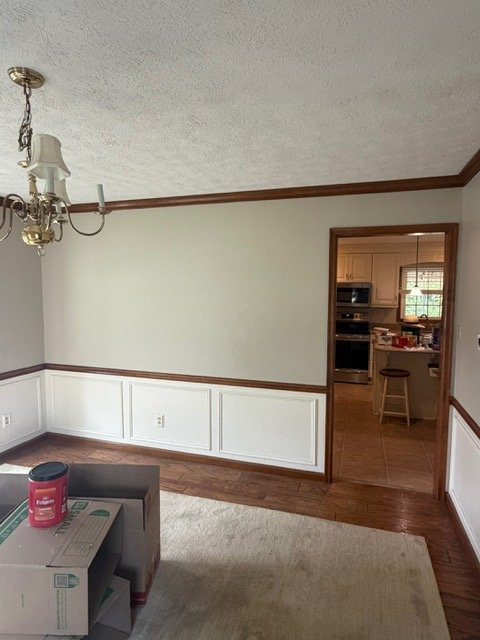
Ask two contractors to quote the same room and you will often get two very different numbers. The gap is almost never the paint. It is how much preparation each one plans to do before the first coat goes on.
What Prep Actually Involves
On a typical Pittsburgh interior repaint, prep means cleaning the surfaces, scraping anything loose, filling nail holes and dents, sanding the filler flush, caulking the gaps where trim meets wall, and priming any patch or stain that would otherwise telegraph through the finish. Furniture gets moved and covered, floors get protected, and edges get masked or cut by hand.
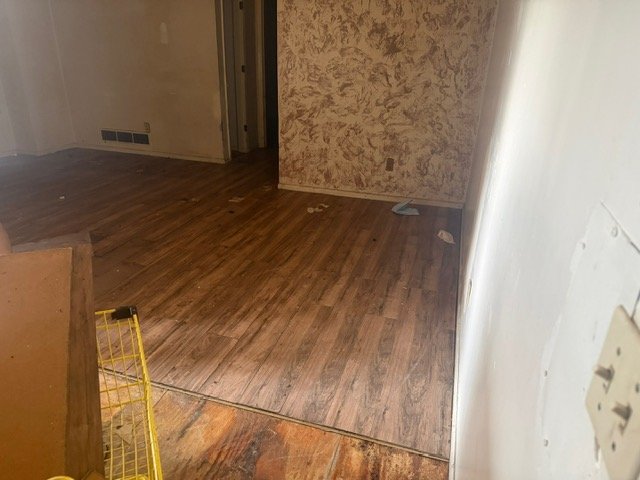
Why It Matters More Than the Brand of Paint
Paint bonds to what is underneath it. On a dusty, glossy or chalky surface it sits on top instead, and it will peel at the first sign of moisture or wear. Prep also decides the things people actually notice from across the room: whether the wall reads flat or lumpy, whether the line between wall and ceiling is straight, whether old patches show through in raking afternoon light.
Older Pittsburgh Houses Ask for More
Plaster walls, layers of previous paint, settled trim and the occasional water stain are normal in homes around here. None of it is a problem, but it does change the prep list. It is worth asking any contractor what their quote includes before comparing prices, because a low number often means the prep line item is missing.
Questions Worth Asking Before You Sign
- What gets patched, sanded and primed, and what does not?
- How are floors and furniture protected each day?
- Are the walls washed before painting?
- How many coats, and is primer separate?
Steel City Strokes handles interior painting and drywall repair in Pittsburgh, so prep and finish are the same person's responsibility. If you want to walk a room and talk through what it needs, get in touch.